

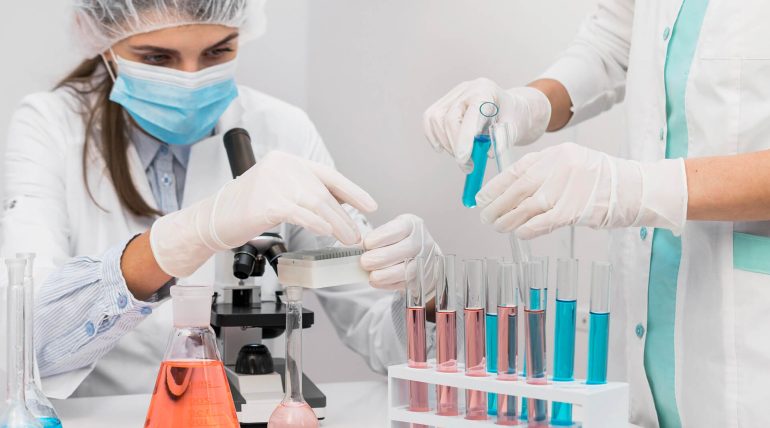
Designing a modern laboratory requires more than simply placing benches and equipment in a room. Today’s laboratories must combine functionality, safety, flexibility, and innovation in order to support both everyday operations and long-term research goals. Whether you are planning a facility for education, healthcare, industrial research, or R&D, several key elements should guide your design.
1. Layout and Workflow
A well-organized laboratory layout ensures smooth workflow and efficiency. Spaces should be arranged to separate clean and contaminated areas, provide clear pathways for staff, and allow for easy movement of equipment and samples. Open-plan concepts with modular furniture are highly recommended, as they can be reconfigured when research priorities change.
2. Safety and Compliance
Safety is a fundamental priority in laboratory design. Modern labs must comply with international standards regarding ventilation, fume cupboards, emergency showers, and eye wash stations. Fire-resistant furniture, chemical-resistant surfaces, and proper signage all contribute to creating a safe working environment.
3. Durable Furniture and Materials
Selecting the right materials directly affects both performance and longevity. Powder-coated steel structures, compact laminate surfaces, stainless steel sinks, and polypropylene accessories are commonly used because of their resistance to chemicals, heat, and everyday wear. Investing in durable furniture reduces long-term costs and minimizes downtime.
4. Ventilation and Air Quality
Proper ventilation is essential not only for safety but also for research accuracy. Fume cupboards and centralized exhaust systems prevent exposure to harmful substances. Energy-efficient solutions are increasingly popular, ensuring both protection and sustainability.
5. Flexibility and Future-Proofing
Research needs evolve quickly. A modern laboratory should be designed with flexibility in mind. Modular benches, mobile cabinets, and adaptable storage systems make it easy to reconfigure spaces as new projects or technologies emerge.
6. Technology Integration
Digital tools and data collection systems are now a vital part of laboratory operations. Integrating IT infrastructure, smart monitoring, and energy management solutions helps improve productivity and reduces operational risks.
Conclusion
A modern laboratory is more than just a workspace – it is a hub for innovation. By focusing on workflow, safety, durable furniture, ventilation, flexibility, and technology, you can create an environment that supports research today and adapts to the challenges of tomorrow.


Nam vel lacus eu nisl bibendum accumsan vitae vitae nibh. Nam nec eros id magna hendrerit sagittis. Nullam sed mi non odio feugiat volutpat sit amet nec elit.
Tam vel lacus eu nisl bibendum accumsan vitae vitae nibh. Nam nec eros id magna hendrerit sagittis. Nullam sed mi non odio feugiat volutpat sit amet nec elit.